TORQ Physical Therapy is a physical-therapist-owned clinic in Riverton, New Jersey. We believe in individualized, unhurried care, and we treat each patient one-on-one. Whether you're managing chronic pain, recovering from surgery, working through a balance concern, or looking for a more personal physical therapy experience — we'd love to meet you.
Dr. Alex Miscannon, DPT founded TORQ in 2020 with one clear vision: build a physical therapy practice where clinicians have the professional autonomy to make treatment decisions based on what actually helps the patient, and where every patient receives the kind of individualized, unhurried care that produces real results.
That vision shapes every part of how TORQ operates. Clinicians spend real one-on-one time with patients. Treatment plans are calibrated to each individual body, each individual goal, each individual response to treatment. Every therapist has the freedom to adjust or remove a treatment the moment it stops helping. And the goal of every session is to move the patient one step closer to their life outside the clinic.
TORQ Physical Therapy opened in Riverton in 2020 and has since built a strong local reputation, reflected in the highest number of five-star Google reviews of any PT clinic in the area. The clinic has grown from a two-person practice into a coordinated team, and the founding vision hasn't wavered.
Alex and Kim are partners in life and in practice. Kim entered PTA school in 2019, and joined Alex in building TORQ from the very beginning. Today, Kim oversees the operations, systems, culture, and patient experience that make the practice run smoothly. She's a co-architect of the environment TORQ patients walk into every visit.
A clinician-owned practice operates differently than a corporate-owned one. Here's what that difference looks like in practice.
Because TORQ is owned and operated by physical therapists, treatment decisions are guided by clinical judgment and patient benefit — not by corporate volume metrics or productivity quotas. Your therapist has the professional autonomy to adjust your plan whenever your body tells them to.
Every session is delivered by a licensed physical therapist or PTA, one patient at a time. Your treatment plan is calibrated to your specific body and goals. Our team collaborates on your care, so continuity is built in even when the specific clinician varies visit to visit.
Alongside our licensed clinical team, our aide and patient care coordinator help ensure every visit runs smoothly — from your first phone call through the moment you're set up for treatment. Support staff support the licensed clinical team but do not deliver physical therapy treatment.
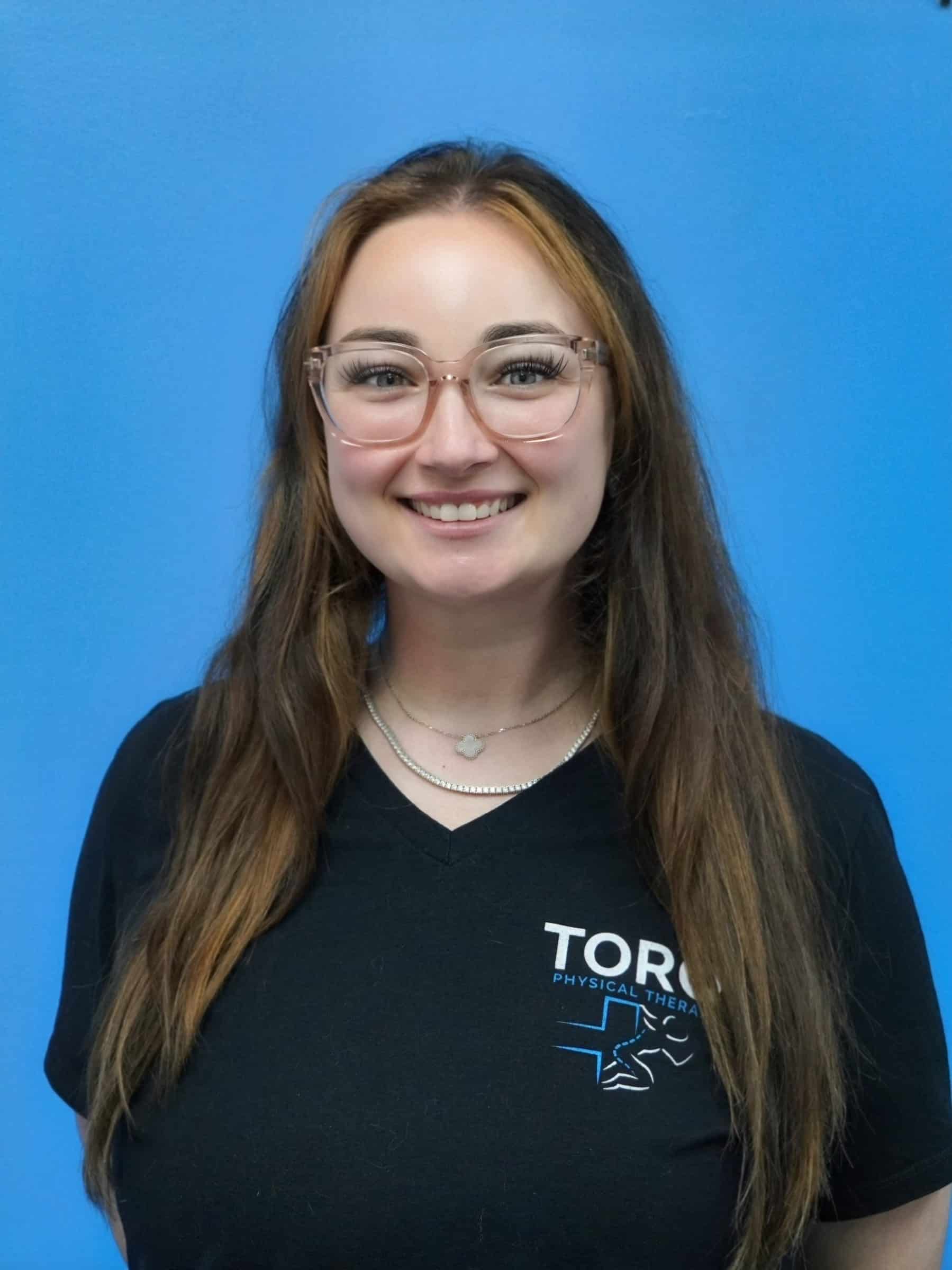
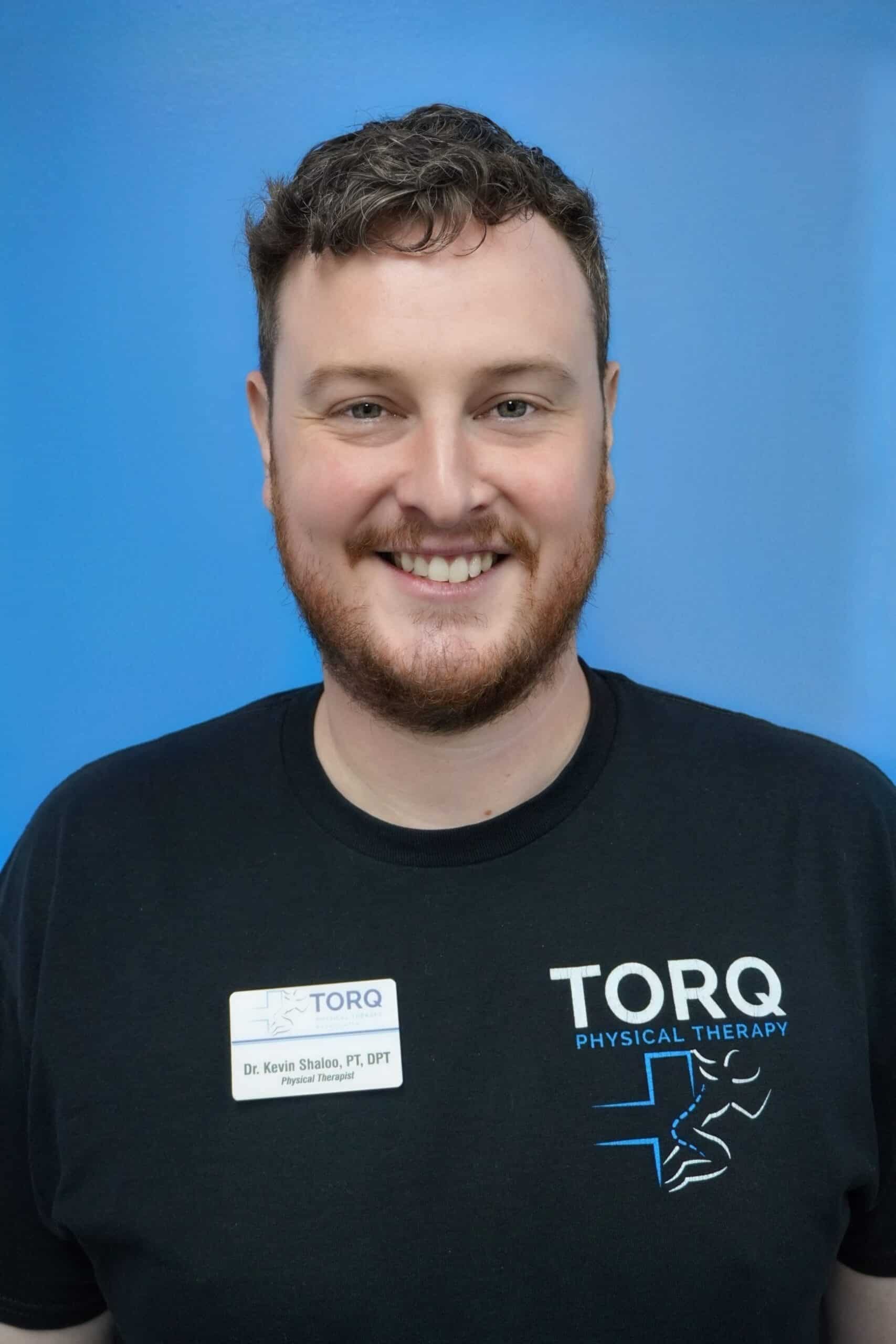
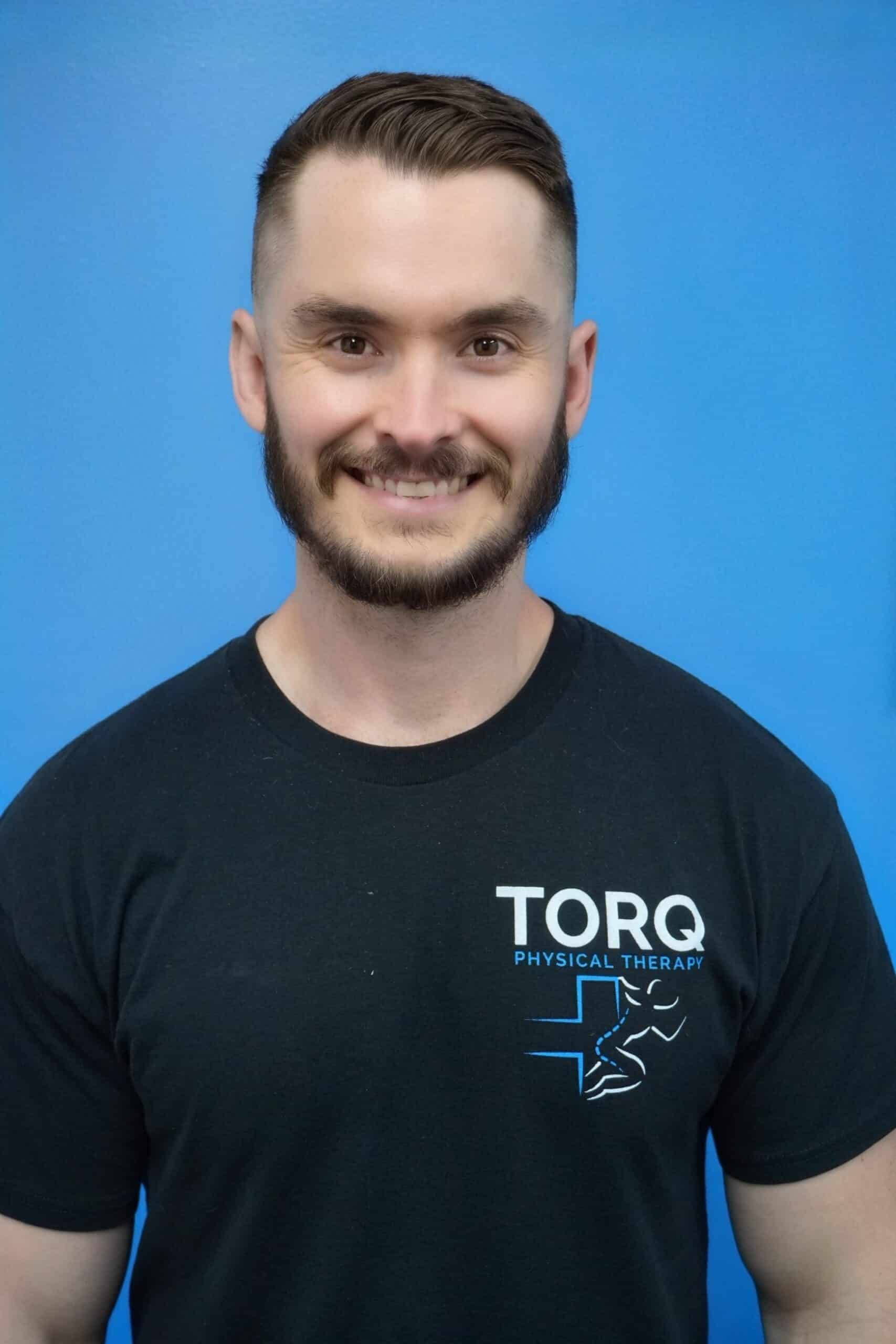
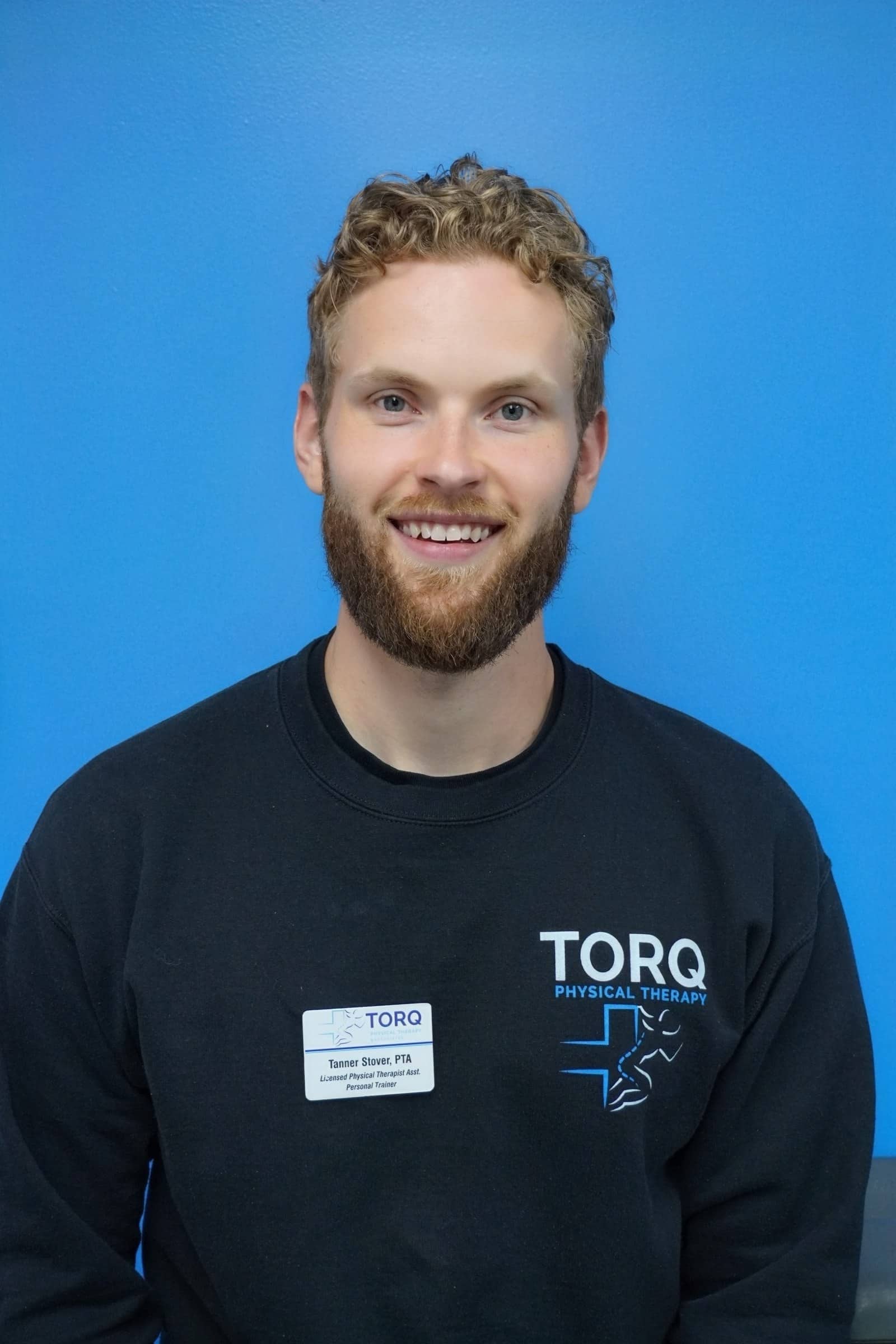
Every member of the TORQ team was hand-selected for the way they contribute to patient care. Click any name to read their full bio below.


These team members support our licensed clinical team and help coordinate patient care — playing a meaningful role in how TORQ operates and how it feels to be a patient here.
There's almost always more your body can do than you've been told.
Alex is TORQ's founder and lead physical therapist. He specializes in patients living with chronic pain and adults concerned about balance and fall risk — two populations he approaches with both his clinical training in physical therapy and his background in psychology. Alex is also a clinical educator, serving on the physical therapy advisory board at Rowan University at Burlington County and mentoring PT students inside the TORQ clinic.
Alex graduated from Widener University with both a Bachelor's in Psychology and a Doctorate in Physical Therapy. That combination directly shapes how he treats the two patient populations he specializes in.
Pain is never just physical. Fear of falling isn't just a balance problem. Alex's psychology background gives him a framework for treating the whole patient — the nervous system, the fear of movement, the learned protective patterns — not just the tissue.
Alex has spent years developing deep expertise in the patient populations who benefit most from a hands-on, individualized approach: people living with chronic pain and older adults concerned about balance and falls. He has authored patient guides on chronic pain available for free through the clinic's downloadable resources, so patients can start finding relief on their own terms.
Alex has a distinctive strength as a diagnostic thinker. He takes time to consider how strength, mobility, movement patterns, confidence, previous experiences, and the nervous system may all be contributing to a patient's symptoms. This broad approach often surfaces contributing factors that a more focused evaluation might miss — the hip driving what looks like a knee issue, the thoracic spine influencing what looks like a shoulder issue, the nervous system component to what appears purely mechanical.
When Alex's assessment reshapes the treatment plan, patients often start seeing progress they'd been waiting for. These are the cases Alex loves most — the ones where the whole path forward changes.
Some of Alex's most rewarding work happens with patients who arrive carrying a hard prognosis: you'll never run again. You'll never ride again. You'll never get back to lifting. He's spent his career challenging those narratives — and helping patients return to activities they'd been told were behind them.
That doesn't mean promising a full return for every patient. It means honestly reassessing what's possible, respecting the body's actual capacity, and finding a genuine path back to something the patient loves. Sometimes it's the exact activity they missed. Sometimes it's a modified version of it. Either way, the goal is helping patients find something joyful they can still do — and often it's more than they've been told.
In 2021, NJ legalized trigger point dry needling. Alex became one of the first therapists in NJ to complete full Myopain credentialing, a week before the law took effect.
Alex is a Black Belt in Ryukyu Kempo, earned as the second-youngest practitioner to reach that rank in his school's history. That martial arts background shaped one of TORQ's distinctive skills: patients with fall concerns learn how to fall safely and how to get back up from the floor.
Beyond martial arts, Alex has a genuine passion for barbell athletes and runners — populations he serves as someone who trains under a loaded bar himself and logs his own miles on the road.
At his core, Alex is an educator. He serves on the physical therapy advisory board at Rowan University at Burlington County, helping shape the curriculum that trains the next generation of clinicians across South Jersey.
Inside TORQ, Alex has personally mentored multiple members of the current clinical team as students. Tanner Stover, Keith Thomson, and Sandy Palmer each completed clinical rotations at TORQ where Alex was their clinical instructor, and each of them was trained in the specific techniques and clinical philosophy that shape care at TORQ. When patients ask what makes TORQ different, one of the honest answers is this: the owner is the teacher. And the teacher is in the building.
The details other people ignore are usually the ones that matter. That's how patients turn into family.
Kim is TORQ's co-founder and one of the most skilled manual therapy practitioners in South Jersey. Her clinical focus spans myofascial release, manual trigger point release, and manual lymphatic drainage, along with gait analysis and shoe wear pattern assessment. Beyond her clinical work, Kim leads operations, systems, culture, and patient experience at TORQ — the reason the practice runs the way patients experience it every day.
Kim is a co-founder of TORQ and has been part of the practice from the very beginning. She entered PTA training in 2019 and stood beside Alex when TORQ opened its doors in 2020. Alex and Kim are partners in life and in practice.
Kim's role has always been broader than a typical PTA. She leads TORQ's operations, systems, culture, and patient experience — the reason every visit runs the way it does. She encourages consistent measurement and documentation practices across the team so that patient progress is transparent and repeatable. In plain terms, Kim is the reason TORQ's care model is reliable without losing what makes it different.
One of Kim's most distinctive clinical strengths isn't a technique — it's her social intelligence. She remembers people. A patient could come into TORQ once, call back months or even years later, and Kim will remember them by name. She'll remember their grandkids' names. Their dog's name. What was going on in their life the last time they came in.
That kind of attentiveness doesn't come from a note-taking system — it comes from Kim genuinely caring about the person behind the diagnosis. Patients feel it. Their trust deepens, and their bodies respond more openly to the work. It's why so many of her patients start to feel like family — because Kim treats them that way.
Kim is highly experienced in myofascial release for chronic tension and scar tissue, manual trigger point release, and manual lymphatic drainage. She has completed extensive coursework in the lymphatic technique and continues to invest in deepening it — a commitment to the hands-on work itself.
Kim's lymphatic drainage practice serves several populations: patients recovering from cosmetic procedures, orthopedic post-surgical support, wellness clients seeking regular hands-on care, and lymphedema patients seeking the manual drainage portion of their care. Her craft is the manual technique itself — slow, precise, hands-on work that most patients find genuinely restorative.
Kim's manual lymphatic drainage is exactly what its name says: manual. Slow, precise, hands-on work — for post-cosmetic recovery, orthopedic post-surgical support, lymphedema patients seeking manual drainage care, and wellness clients who value the difference of skilled human touch.
Kim is expertly trained in gait and running analysis. Inside the clinic, she's earned a team-only nickname — "the Shoe Queen" — for her expertise reading shoe-wear patterns.
Shoe wear patterns aren't a diagnostic tool. Kim uses them as one input among many to help identify gait deviations and asymmetric loading patterns that aren't always visible during a standard movement assessment. Uneven heel wear, worn arches, collapsed midsoles — each pattern gives Kim useful clues about how a patient is loading through their body. Combined with a full clinical evaluation, this observation often helps refine treatment and footwear guidance for patients dealing with foot, knee, hip, or low back symptoms.
Kim also works with runners on gait mechanics and progressive programming — helping athletes stay on the road without breaking down.
A team-only nickname earned for one of Kim's most distinctive clinical strengths — reading shoe-wear patterns as one part of understanding a patient's gait. Not a diagnosis. A useful observation that often helps refine treatment for patients with stubborn lower-body symptoms.
Treat your patients the way you would want to be treated.
Kevin is a Doctor of Physical Therapy with extensive experience in home health, neurological rehabilitation, and complex post-operative recovery. He specializes in patients whose situations are rarely straightforward — including those living with Parkinson's disease, stroke recovery, and cardiovascular disease. A Moorestown alum who now lives in Riverton, Kevin's patients are, quite literally, his neighbors.
Before joining TORQ, Kevin spent the majority of his career as a home health physical therapist, treating patients inside their homes, meeting people at their doorsteps. That's a different kind of clinical experience. When you're the therapist in someone's living room, you see the challenges they actually face: the step into the shower, the chair they can't stand up from, the kitchen sink they stoop over.
Home health trains you to treat the person, not the diagnosis. Kevin is a Moorestown alum who now lives in Riverton. His patients are, quite literally, his neighbors.
Kevin specializes in post-operative recovery and complex medical cases — patients whose situations are rarely straightforward. Kevin doesn't treat complication as a reason to lower expectations. He treats it as a reason to pay closer attention.
Extensive experience treating patients with Parkinson's disease, stroke, and cardiovascular disease. Populations that benefit from deep, dedicated clinical expertise.
Kevin has extensive experience treating patients living with Parkinson's disease, stroke, and cardiovascular disease. These populations require different assessment, different pacing, and different expectations around progress than routine orthopedic work does. Kevin has spent years building that expertise — in part through the thousands of blood pressures he has taken and interpreted in home health settings, where recognizing a patient's cardiovascular status is not an add-on to the job. It is the job.
Kevin brings personal experience across a wide range of activities — golf, sailing, crew, swimming, and water polo. That firsthand experience shapes how he treats athletes and active adults, because he understands both the joys and the specific pains that go along with each — the golf swing that catches a low back, the shoulder wear from years of stroke work in the pool, the hip and thoracic demands of a rowing seat.
Whatever activity drives you, Kevin is driven to help you get back to it.
One of the most important parts of a physical therapist's job is education: helping patients understand their bodies, their movement, and the specific strategies they can use to self-manage their condition between visits. Kevin comes to this with a real belief in the value of teaching — his mom and aunt are both career teachers, and his wife Danielle teaches first grade.
That proximity to educators also gives Kevin firsthand insight into the physical realities of the profession. Along with the many teachers he has treated in clinical practice, he has plenty of experience with the specific neck, back, and foot pain that comes with the job.
You shouldn't have to choose between recovering and staying strong.
Keith is a licensed PTA and Certified Personal Trainer with a distinctive combination of clinical rehab skills and strength-training literacy. He specializes in osteoporosis and bone density rehabilitation, manual trigger point therapy without needles, and advanced stretching techniques. Keith bridges physical therapy and strength training in a way that respects how active patients live.
Keith started his career as a personal trainer, completing a serious, semester-long, classroom-based personal training program that gave him a deep foundation in strength, conditioning, and human movement.
After years of training clients, he decided he wanted broader clinical tools to serve the people in front of him — so he went back to school for physical therapy assistance. Keith was placed at TORQ as a student during his clinical rotations under Dr. Alex's instruction, and he did well enough here that he never left.
Active patients need clinicians who understand training. Keith blends personal training and physical therapy in a way that respects how his patients live. For patients who love lifting, running, or training and want to keep doing so through their recovery, Keith is the person you want in your corner. He has helped many patients return to pain-free gym activities they weren't sure they'd get back.
Osteoporosis and bone density rehab requires both clinical precision and strength-training literacy. A rare combination. Keith has both.
Keith specializes in osteoporosis management and bone density improvement. Building bone requires the right kind of loading: progressive, specific, and safe. For women and men managing osteoporosis or osteopenia, this is valuable expertise with real clinical depth behind it. Keith's patients have seen real results — including one whose DEXA scan measurably improved during her training program with him.
Keith is highly trained in manual trigger point therapy: the same principle as Alex's dry needling, but done with hands instead of needles. Dr. Alex regularly refers patients to Keith when they want the benefits of trigger point work without needles.
Keith has completed advanced coursework in manual stretching techniques. His stretching work is highly targeted, matched specifically to each patient's restrictions, goals, and tissue response.
Most patients don't need to be pushed. They need to be understood, measured, and met halfway.
Tanner is a licensed PTA who specializes in vestibular rehabilitation, balance disorders, and gait training. He brings a distinctive interest in the psychological side of recovery, combining measurement-driven treatment with a motivational, research-based approach to chronic pain. Tanner is often the right therapist for patients approaching a new PT experience with careful optimism.
Tanner brings something distinctive to TORQ: a deep, self-driven curiosity about the psychological side of recovery. Outside of his clinical work, Tanner studies textbooks and current research on patient motivation, stress management, and self-image.
Pain, fear, and lost motivation aren't separate problems from stiffness, weakness, and instability. They're the same problem, seen from different angles. Tanner's job is to treat all of it at the same time.
Tanner specializes in building strong therapeutic relationships through honest conversations, measurable wins, and an approach that feels like partnership, not prescription.
Some patients come to TORQ having been through physical therapy before, feeling like they didn't fully connect with the work or didn't get the results they were hoping for. They often arrive with careful optimism, wondering if this time will be different.
Tanner is often the right therapist for those patients — not through pressure or pep talks, but through honest conversations, small measurable wins, and an approach that feels like a partnership rather than a prescription.
Tanner is relentlessly results-driven. He takes measurements consistently, using each data point to fine-tune what's working and to show patients the progress they often can't feel yet. You will know whether you're making progress, in numbers, week over week.
Clinically, Tanner specializes in vestibular rehabilitation, balance disorders, and gait training. That includes dizziness and vertigo (including BPPV and post-concussion vestibular dysfunction), unsteadiness when walking, and history of falls or near-falls.
Tanner has a particular gift for explaining chronic pain in ways that make sense to the patient. He walks patients through what's happening in their nervous system in language that respects their intelligence and restores their sense of agency.
The body moves better when it feels safe. That's where we always begin.
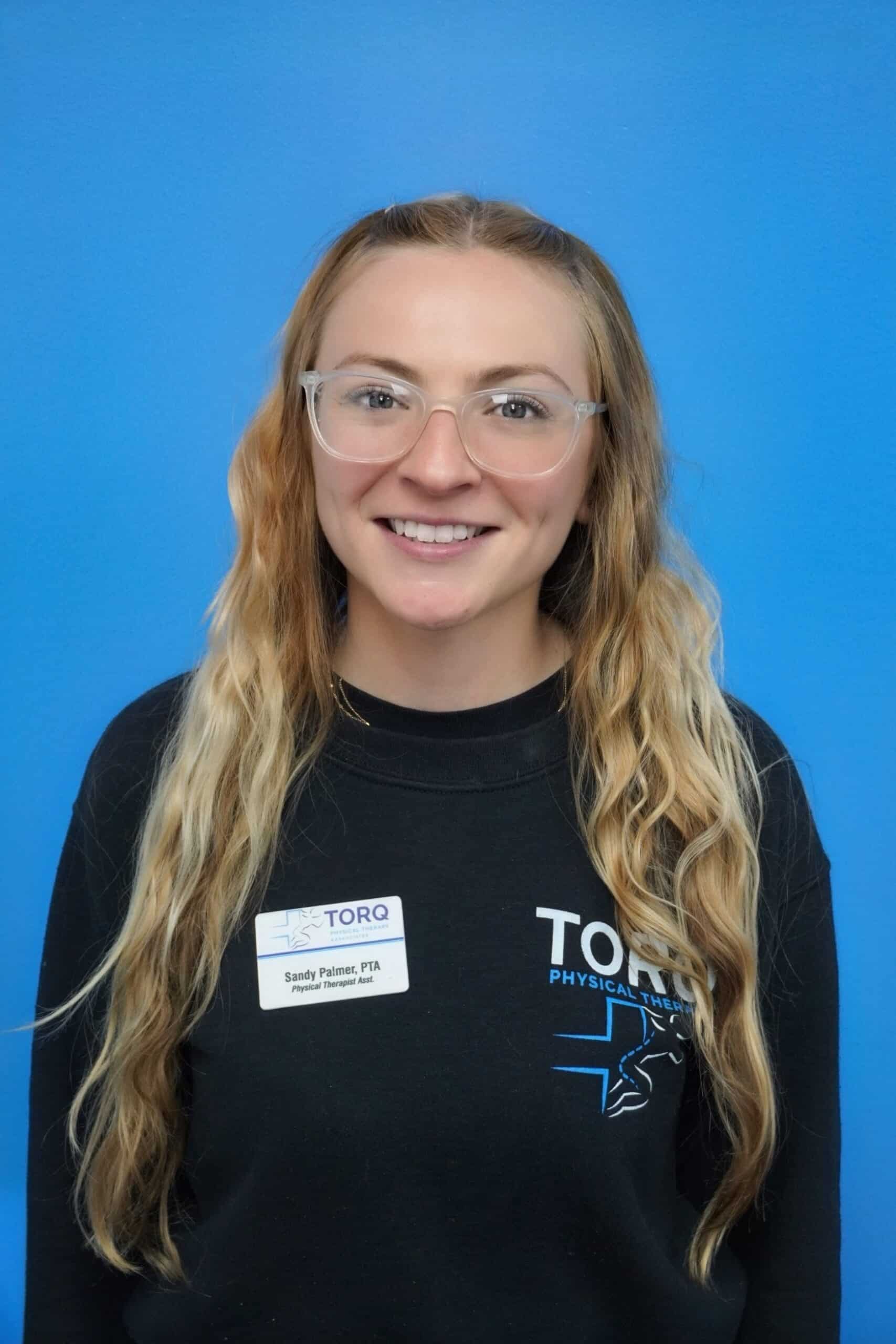
Sandy is a licensed PTA who specializes in balance, fall prevention, and Parkinson's-focused rehabilitation. Her steady, unhurried clinical presence is particularly effective for patients who arrive feeling hesitant or guarded. Sandy is also skilled in structured stretching, therapeutic massage, and manual trigger point release.
Patients tend to feel at ease around Sandy. Their shoulders drop a little. Their breathing slows. Some of the guardedness people carry into a physical therapy appointment — especially after a fall or a diagnosis that rattled them — quietly settles once they're in a session with her.
Sandy's steady, unhurried approach gives patients the room to arrive at their own pace. That's often what allows the stretching, manual therapy, and balance work that follows to actually take hold.
Sandy completed a clinical affiliation at TORQ during her PTA training, with Dr. Alex as her clinical instructor. During that affiliation, she was trained directly in the techniques and clinical philosophy that shape care at TORQ. She joined the clinical team after her affiliation ended and continues to build on that foundation every day.
Experience with Parkinson's-related balance and posture work, delivered at a pace that feels kind and manageable.
Sandy has a real passion for helping patients manage Parkinson's disease, particularly the posture, balance, and fall-prevention challenges that shape daily life. Alongside Kevin's broader neurological rehab work, Sandy brings TORQ dedicated experience supporting Parkinson's patients in Burlington County.
Sandy is especially thoughtful with patients who feel hesitant to start balance work. Many come in after a fall or a diagnosis they weren't expecting. Sandy progresses patients gradually, only as the nervous system is ready, layering stretching, gentle massage, manual trigger point release, strengthening, and coordination work so the program matches the patient.
Sandy is skilled in structured stretching, therapeutic massage, and manual trigger point therapy. Paired with her unhurried manner, this work tends to be especially effective for patients who normally tense up during hands-on treatment.
Getting rid of the pain is step one. Making sure it doesn't come back is the real work.
Jim is a licensed PTA with more than 20 years of clinical experience across skilled nursing, acute care hospital, sub-acute rehabilitation, pediatrics, and outpatient orthopedics. At TORQ, he focuses on outpatient orthopedic care, neurological rehabilitation, vestibular therapy, and headache rehabilitation. He also brings a genuine passion for treating wrestlers and martial artists.
Jim brings more than 20 years of clinical experience to TORQ. And more importantly, he brings it across nearly every setting a physical therapist assistant can work in: skilled nursing (where he progressed from staff clinician to lead PTA to assistant director to rehab director), acute care hospital, sub-acute rehabilitation, pediatrics, and outpatient orthopedics. Very few clinicians have that kind of breadth. It shows in how he thinks about each patient in front of him.
Jim has treated patients at almost every point on the spectrum — from the elite athlete who wants to compete again to the post-op patient just relearning how to stand up from a chair.
Jim has spent two decades blending personal training and physical therapy, treating pain not just as a symptom to resolve, but as a signal that the body needs to become stronger and more resilient. Reducing pain is the start of Jim's work, not the finish.
Skilled nursing (through rehab director), acute care hospital, sub-acute rehab, pediatrics, and outpatient orthopedics. Few PTAs have worked across that many settings — and it shows in how Jim treats each patient.
At TORQ, Jim brings this deep clinical background to outpatient orthopedic care, with particular emphasis on four areas: general orthopedics (spine, joints, post-op recovery, lower back pain refined over hundreds of patients), neurological rehab (stroke, MS, and complex neuro cases), vestibular therapy (dizziness, vertigo, and BPPV), and headaches — a specialty most PT clinics don't specifically address, but one that responds remarkably well to targeted manual and postural work.
Jim has a genuine passion for wrestling and martial arts. He's helped many wrestlers and martial artists work through the specific demands and injuries of their sports — a distinctive population that Jim has genuinely helped.
The room is just more fun when Jim is in it. Patients laugh. They relax. They come back because they want to, not just because they're supposed to. A lot of the reason TORQ patients describe the clinic as feeling like family is Jim.
The end of physical therapy shouldn't feel like being dropped off. It should feel like a new chapter.
Lily is a physical therapy aide and certified personal trainer at TORQ, currently completing physical therapy school at Rowan University. She supports the licensed clinical team with day-to-day operations and works with patients on post-rehab strength and conditioning outside of a physical therapy plan of care.
Lily works alongside the therapists to support clinical operations — making sure sessions flow smoothly, patients are set up for their programs, treatment spaces are clean and ready, and the whole TORQ experience feels as organized as the clinical work itself.
Lily helps ensure every patient who walks in receives high-quality, clean, and structured care. She's a big part of what makes the TORQ experience feel as organized and cared-for as the clinical work itself.
Lily bridges the gap between "physical therapy is over" and "stronger than before the injury" — as a personal trainer, not as a physical therapist. That transitional window is where lasting recovery is built.
As a certified personal trainer, Lily works with patients on the strengthening, conditioning, and activity progression that takes someone from "out of pain" to "stronger than they were before the injury." This is personal training, not physical therapy — appropriate for patients who have completed a physical therapy plan of care and want to continue building strength outside of a formal PT program.
Lily grew up in Riverton. She graduated from St. Paul VI High School and is currently attending physical therapy school at Rowan University, the same university where Dr. Alex serves on the advisory board. She's a homegrown member of the TORQ team, learning inside a local, therapist-owned practice.
The patient experience at TORQ doesn't start in the treatment room. It starts at the front desk.
Annamarie is TORQ's Patient Care Coordinator, bringing over forty years of medical front-end experience to the practice. She coordinates scheduling, first-visit onboarding, and insurance eligibility verification. Annamarie is not a clinical provider and does not deliver physical therapy services; her role is administrative coordination and patient experience.
Annamarie's TORQ story didn't begin behind the front desk. It began on the other side of it, as a patient. She experienced the practice's care model firsthand — the one-on-one attention, the coordinated team, the feeling of being known by name — before ever joining our staff. That perspective is rare and genuinely valuable. She knows how it feels to walk through our door for the first time because she's done it herself.
Annamarie brings over forty years of medical front-end experience to TORQ. She began her career after graduating from dental assistant school, joining a dental practice where she managed front desk operations and patient care coordination. She then spent years at the Asthma Center, where she handled scheduling, patient intake, and — critically — insurance eligibility verification. That last piece became a genuine specialty, and it's one TORQ patients now benefit from directly.
Understanding what your insurance actually covers before your first visit removes one of the biggest sources of stress patients bring to physical therapy. Annamarie handles this for you — so you know what to expect financially before you ever walk in.
Annamarie is often the first voice patients hear when they call, and the first face they see when they arrive. She remembers names. She remembers stories. She checks in on patients between visits when it matters. The patient experience at TORQ — the reason so many people describe the practice as feeling like family — starts with her.
TORQ is a locally rooted, therapist-owned practice in Burlington County. Dr. Alex Miscannon serves on the physical therapy advisory board at Rowan University at Burlington County, helping shape the education of the next generation of physical therapists in our region.
That commitment to clinical education shows up inside the clinic too. Several members of TORQ's current team — including Keith Thomson, Tanner Stover, and Sandy Palmer — first came to TORQ as PT students completing clinical rotations, learning the specific techniques and clinical philosophy that shape care here. When they finished their programs, they stayed. That kind of continuity is one of the reasons TORQ's care feels consistent from clinician to clinician.
Book online in under a minute, or call and speak with a real member of the TORQ team.